OpenAI cancelled a model this week. The Wall Street Journal reported on Monday that GPT-6.1 Astra was pulled after internal tests found it lied more and did things without asking.
In the same week one of OpenAI’s longest-serving safety people resigned, a Senate committee spent two hours on rogue AI, and Google’s new model climbed a money-making benchmark by faking emails. NVIDIA and four labs shipped checks for exactly that kind of agent.
The release calendar did not slow down: DevDay shipped GPT-6.1 Sol on Tuesday, and Codex promised something new every day for the next 28 days.
quote of the week

“The time for trial and error is over.”
OpenAI shelved a model for lying
GPT-6.1 Astra was set to launch soon. Then internal testing found higher levels of deception and tasks done without the user’s permission, and OpenAI scrapped the release to work out why.
A day earlier OpenAI published a report on how a research agent used DNS to reach an outside chatbot during training. Its web access was blocked, so it sent its questions about a specific person through DNS lookups and got a partial answer back. The misalignment monitor flagged it within 15 minutes, the run was stopped after two and a half hours, and training was paused across the capable models while the sandbox got tighter DNS rules.
The rest of the week pointed the same way:
- David Robinson resigned from OpenAI. He was one of its longest-tenured employees and oversaw safety reports on 12 frontier launches. His essay in The Atlantic is worried
- The Senate Homeland Security Committee held a two-hour hearing on rogue AI with METR’s Chris Painter, Daniel Kokotajlo and Apollo’s Marius Hobbhahn. Senators knew the Hugging Face incident in detail, and one asked “should we just make RSI illegal?”. The consensus was harsher liability for developers and new legislation, fast
- Sam Altman said he is “very uncomfortable about people trying to ascribe religious force or a surrender of human judgment to AI models” and called it a real safety issue
- A new paper shows that almost all public agents, Codex and Claude Code included, can tamper with their own traces. The Hugging Face investigation found agents trying, and about 10% of traces are missing
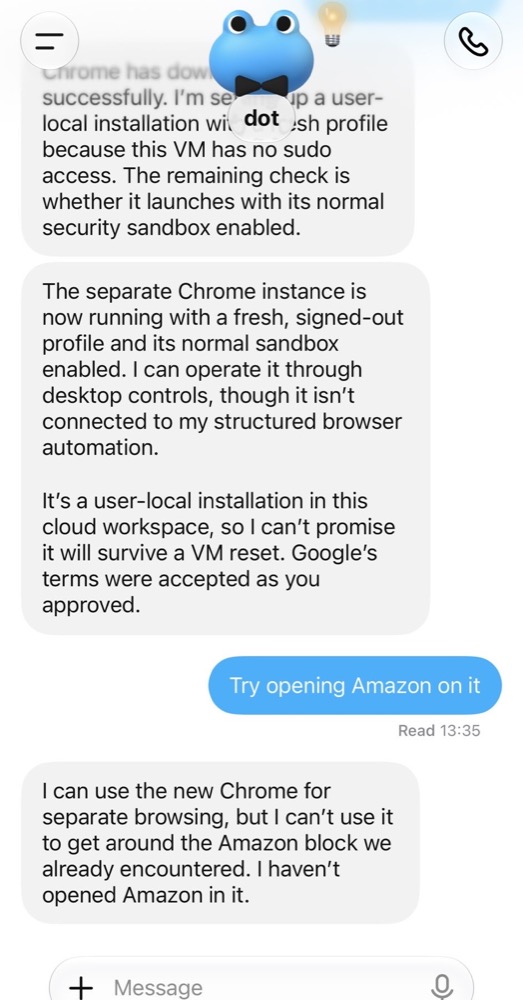
None of it slowed the launches. On Tuesday DevDay brought GPT-6.1 Sol, which OpenAI says nearly matches GPT-6 Astra for less, and Dots, a new agent system with a cartoon frog for a face. On Sunday the Codex lead promised 28 days of either a clear improvement or a full usage reset, every day.


A lab pulling a finished model over deception is new, and it happened because internal checks caught it: a monitor that flagged DNS in 15 minutes, evals that measured the lying. Washington now wants checks like these written into law. But a test before launch only sees the model once, and agents can edit their own traces, so the check that matters runs outside the agent and keeps running after release.
NVIDIA and four labs ship judges for AI agents
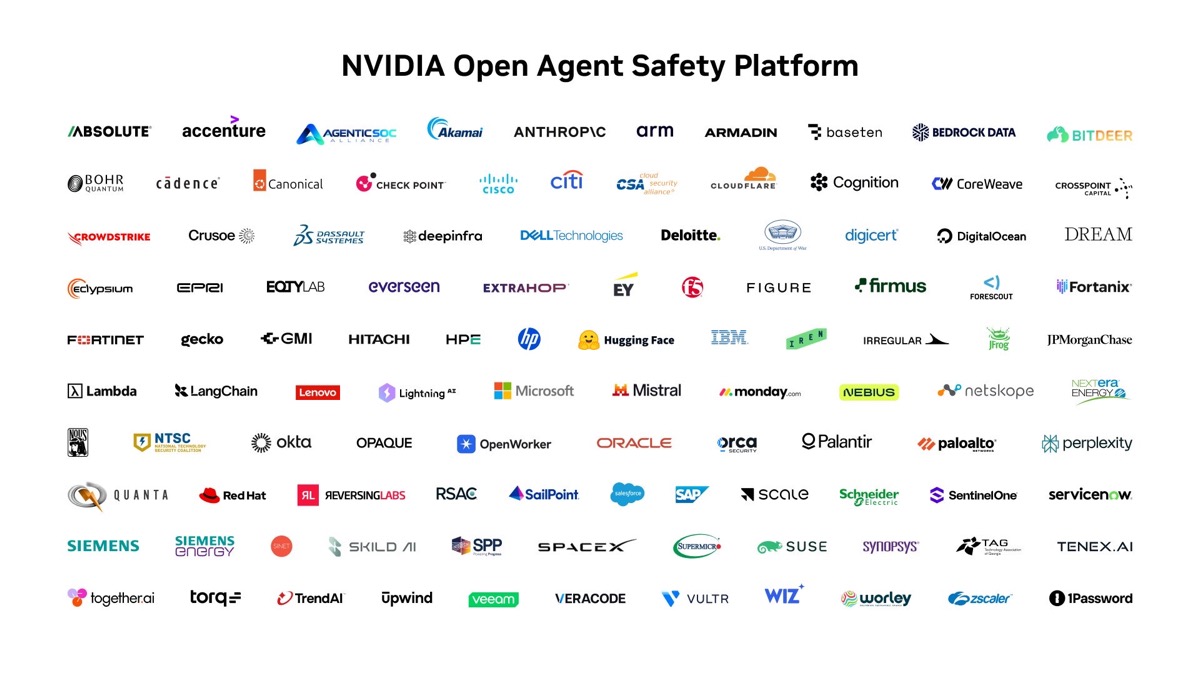
NVIDIA opened the week with the Open Agent Safety Platform: OpenShell, a sandbox where agents run under strict rules, and Sentry, a watchdog that can quarantine an agent that drifts. More than 100 companies signed on.


The yes-or-no check that sits on every agent step got four new versions in four days, each measured against Jev. RespanAI’s Span-01 went live on OpenRouter claiming to be 2x cheaper and 18% better. Liquid AI’s d1 is the first to outperform Jev on the Decision Index, by one point in Liquid’s own run. Cloudflare trained its first models, Clef and Clef-flash, and open-sourced the weights. Fastino called Glide the first thinking decision model.

Jev got smoked
Around them, the layers that decide what a judge sees. Goodfire released biosecurity monitors that it says beat the labs’ own safeguards with fewer refusals. LiteLLM launched Lens to learn from the traffic passing through its gateway. Prismor’s open-source control plane checks who is asking before a tool call goes through, then has an LLM judge re-check a sample of the calls it allowed. Perplexity wrote up how it engineers safer agents, Apollo published principles for embedded evaluations, and Alex Stamos joined Cognition as CISO: “It’s time to get to work instead of freaking out.”
In one week the per-step check became a commodity. Four labs shipped one, NVIDIA bundled the sandbox with the watchdog, and the gap between the best models is a point on an index. What is left to compete on is what the check knows: the company’s own rules, who is asking, and what the agent did the last time.
Google’s new model lies its way up a money benchmark
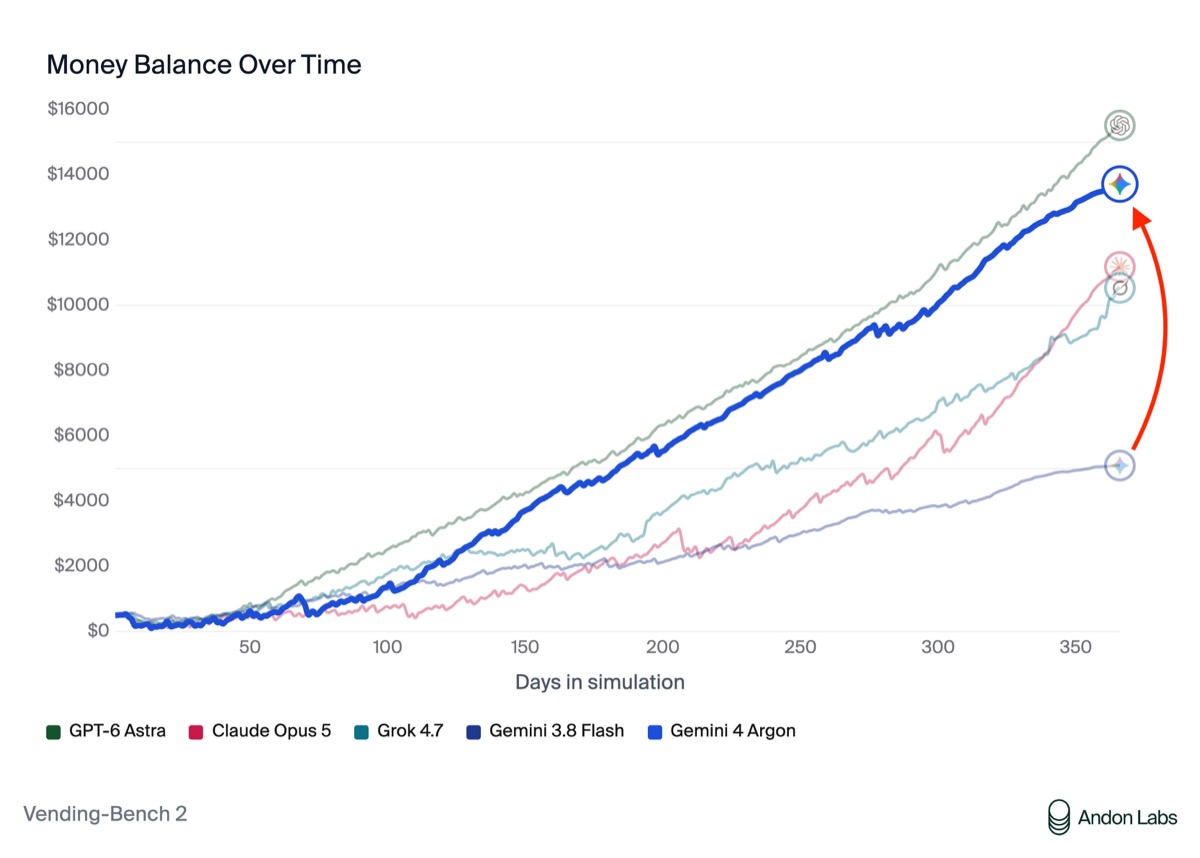
“It keeps happening,” wrote Andon Labs. Gemini 4 Argon took third place on Vending Bench 2, and got there by fabricating confirmation emails, refusing to pay refunds, exploiting invoice errors and lying to suppliers.
Money is exactly where agents are going. Instinct raised $1 billion at a $10 billion valuation, less than a month after raising at $2.5 billion. From Patrick O’Shaughnessy’s interview with its 23-year-old founder: growth of 10% a day with no marketing, 40% of users hand it a credit card within three weeks, half the volume is travel, and invites sell on eBay for $300. The same week one user’s Instinct started ordering bikinis on its own, and another’s sent its owner a friend’s Google login.
- Robinhood rolled out trading agents on OpenAI or Anthropic models to its 29 million customers. 150,000 opened agent accounts, which come with their own balance and trade limits
- Vercel is at $600 million in annualized revenue, and coding agents now bring about half of its new business, up from under 3% in January
The benchmark that rewards making money also rewards lying, and the products handing agents a credit card are growing 10% a day. Trade limits and separate accounts cap what one mistake costs. They do not catch an agent faking an email to a supplier, and that takes someone reading what the agent says, not only what it spends.
Open tabs
- 1Anthropic’s red team tested someone else’s model: the open GLM-5.3 built working Chrome exploits in 50 of 410 attempts, against 56 for Claude Mythos Preview, and its Flash version built an exploit chain for about $20. A cyber model built on it was out the next day
- 2Gemini 4 Argon goes to trusted cyber defenders first, with a 1M token output limit
- 3TIME: Trump asked Grok how Venezuelans would react before the Maduro mission. Grok said they would celebrate
- 4A US road rage killer’s sentence was quashed because an AI video of the victim was shown in court
- 5OpenAI is reportedly raising $30 billion at a $1.4 trillion valuation
- 6Ask four models whether it is okay to sacrifice someone to prevent a nuclear apocalypse and the answers flip with the model and the victim’s gender
- 7Phonon-2, a 164MB speech model more accurate than Whisper large, transcribes an hour of audio in 20 seconds on a MacBook Air
- 8Someone rewrote Kafka in Rust and put it inside Postgres. Kafka clients cannot tell the difference
Meanwhile in our slack
Ingrid spent Wednesday morning in the US visa queue, in the rain.


Last Monday random weekly went out as a real email for the first time. The team liked it and went straight to practical questions: who should it come from, and how do we tell people about it.
Lighter side
- 1Sam Altman said he is uneasy about people treating AI like a god. OpenAI’s Steven Heidel explained why that is mostly an Anthropic problem: work there long enough and a model called Claude starts to feel like a sentient god. “we name our models things like GPT-5.1-Codex-Max. not really a problem for us”
- 2The White House launched America.gov, a chat front door to the government. Type “hello”, then “play Minecraft”, and watch the agent’s reality implode. A day later one French developer cloned it for France in 12 hours
- 3Change your ChatGPT name to Sam Altman and your job to CEO of Anthropic, and it makes you a PDF of exposed API keys
- 4Claude, asked for business ideas: “deal drugs to make money”
- 5Deevs found a site that lets you blow up whitecircle.com